
by Bruce Dunlavy
(An index to my other posts is available from the pull-down menus at the top of this page, and my blog home page and index of other posts may be found here.)
As I write this, an idea is being bruited about that Elon Musk, famous rich person and supporter/confidant of President-elect Trump, might be put forward as a candidate for Speaker of the U.S. House of Representatives.
Although the tradition in this country has been that the Speaker be chosen from among the ranks of the Members of the House, the Constitution does not require it. Nor are there any qualifications set forth for holders of the office. Article I, Section 2 merely states, “The House of Representatives shall chuse [sic] their Speaker and other Officers ….”
In parliamentary systems of government such as the United Kingdom, the head of government is the prime minister. The job of the speaker is to maintain order and rule on procedural issues, and it is usually non-partisan. In the American system, the Speaker of the House is a combination of the two, legislatively a prime minister, but with the added ability to decide procedural questions.
Thus the office is a powerful one, and there is no Constitutional barrier to prevent Musk – or almost anyone else – from assuming it. The only instances in which the Constitution addresses the matter are those involving general disqualifications, including impeachment from any governmental office, or conviction of certain crimes.
The speaker of the house sits behind only the Vice-President in the order of succession to the presidency in case of the death, disability, or resignation of the president. However, Musk would be Constitutionally ineligible to serve as President or Vice-President of the United States, since Article II requires the President to be a “natural born citizen” and the Twelfth Amendment stipulates, “[N]o person constitutionally ineligible to the office of President shall be eligible to that of Vice-President of the United States.”
In an earlier post I touched on the concerns that led the Framers of the Constitution to require that the President be a “natural born citizen.” They were (and, I believe, rightly so) fearful that in the new system of government they had created, without any titles of nobility or inherited political power, a rich noble from abroad might seek to use such a position to acquire influence in the United States.
In Europe, the richest individuals had always been kings, dukes, princes, and other titled aristocrats who derived their wealth from ownership of huge areas of land. With few exceptions, European governments had included powerful assemblies of the nobility, thus ensuring that political power arose from hereditary wealth and offices.
Thus the Framers took pains to eliminate the possibility that the Presidency could be occupied by someone who had loyalties to another nation or government. The Presidency was limited to those who were United States citizens from birth and who had lived in the U.S. for fourteen years. The Framers were not trustful of the whims of the common people and feared that they could be easily duped by a charlatan. The intent of the specified requirements was to prevent some rich foreigner (and “rich” implied possession of a title of nobility as well as a continuing source of immense wealth from abroad) from quickly descending on our shores and using wealth and prestige to sway the allegiance of the masses and influence domestic politicians.
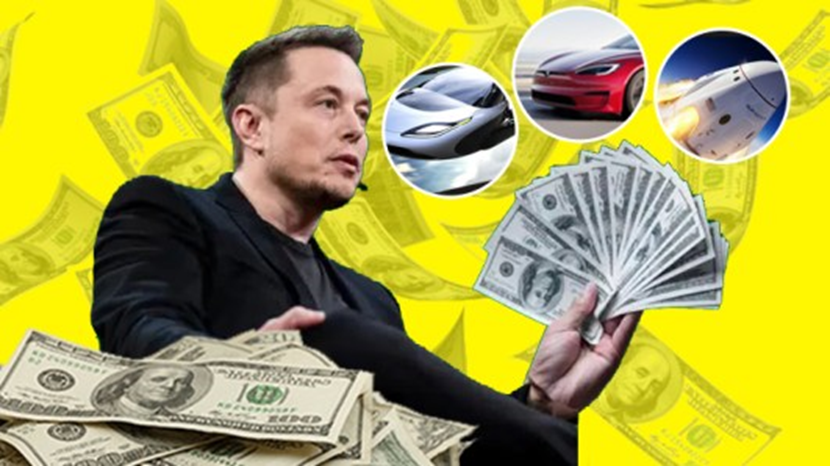
Image credit: modelzview.com
The founders of the American nation likely did not foresee the kind of wealth that someone such as Elon Musk could acquire without a title of nobility or a foundation of massive riches based on the ownership of land. If they had, they would likely have thought the protections they wrote into the Constitution would be sufficient to keep such an individual from gaining undue political power in this country.
Musk’s success in political inveiglement suggests they may have been wrong. Although there is little likelihood that they could have come up with anything better to ensure their intentions were successful, Musk has been able to gain considerable influence with the incoming President of the United States. Musk’s ability to hold Donald Trump’s ear, combined with his widespread access to the public mind, will likely assure that his enormous supply of money will continue to grow rapidly. This foretells an upward spiral of increasing money leading to increasing influence.
The Framers were right to be concerned about the possibility of a foreign oligarch arriving in the United States and using wealth to buy political power. Perhaps Elon Musk was not exactly what they had in mind when they added Constitutional language to avert this, but he looks a lot like it. What does the future hold, and will that which the Framers feared be realized? It’s anyone’s guess.
 A GOOD MAN TO KNOW